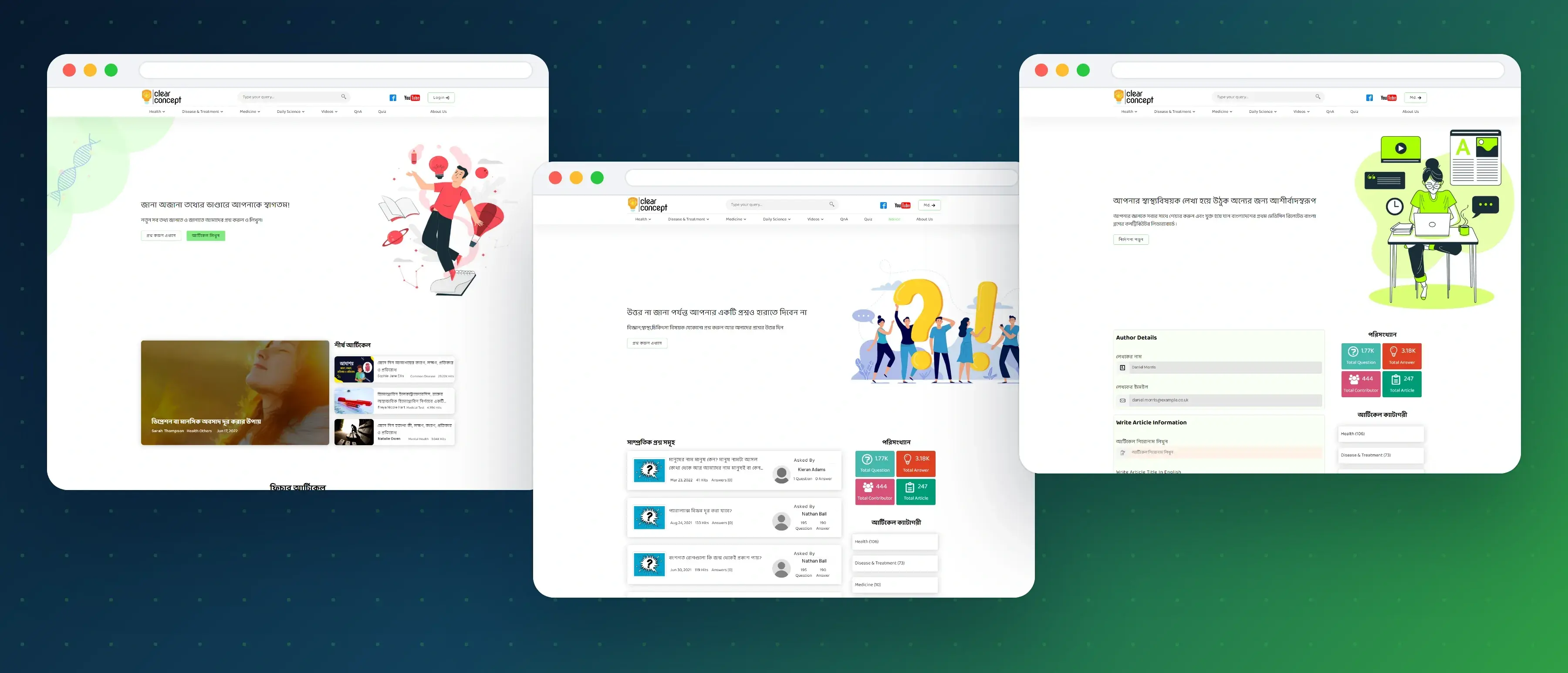

Clear Concept - Interactive Science and Health Platform
One membership for science, health and answers in Bangla: articles, videos, timed quizzes, a Q&A community and consultations on one platform its own team ran. Contributors wrote through a built-in editor and earned points for every answer, quizzes kept their clock on the server so results could not be gamed, and readers booked a consultation with a nutritionist by category. Built in 2020 on Node.js, Express and MongoDB.

Md Moniruzzaman

The Full Story
A dozen features that each could have been a product, shipped as one platform a team could run on its own.
Many reasons to come back
The organisation behind Clear Concept shared reference-based health and science information on social media, where a good post scrolls away in a day and a question in the comments rarely gets a proper answer. It wanted one place people would return to: to read and watch, test what they know, ask a question and get a real answer, and book a consultation, all under one membership, in Bangla.
That is a dozen subsystems, each of which could have been its own project, and they had to ship as one coherent platform in 2020, then be run by the organisation's own team.
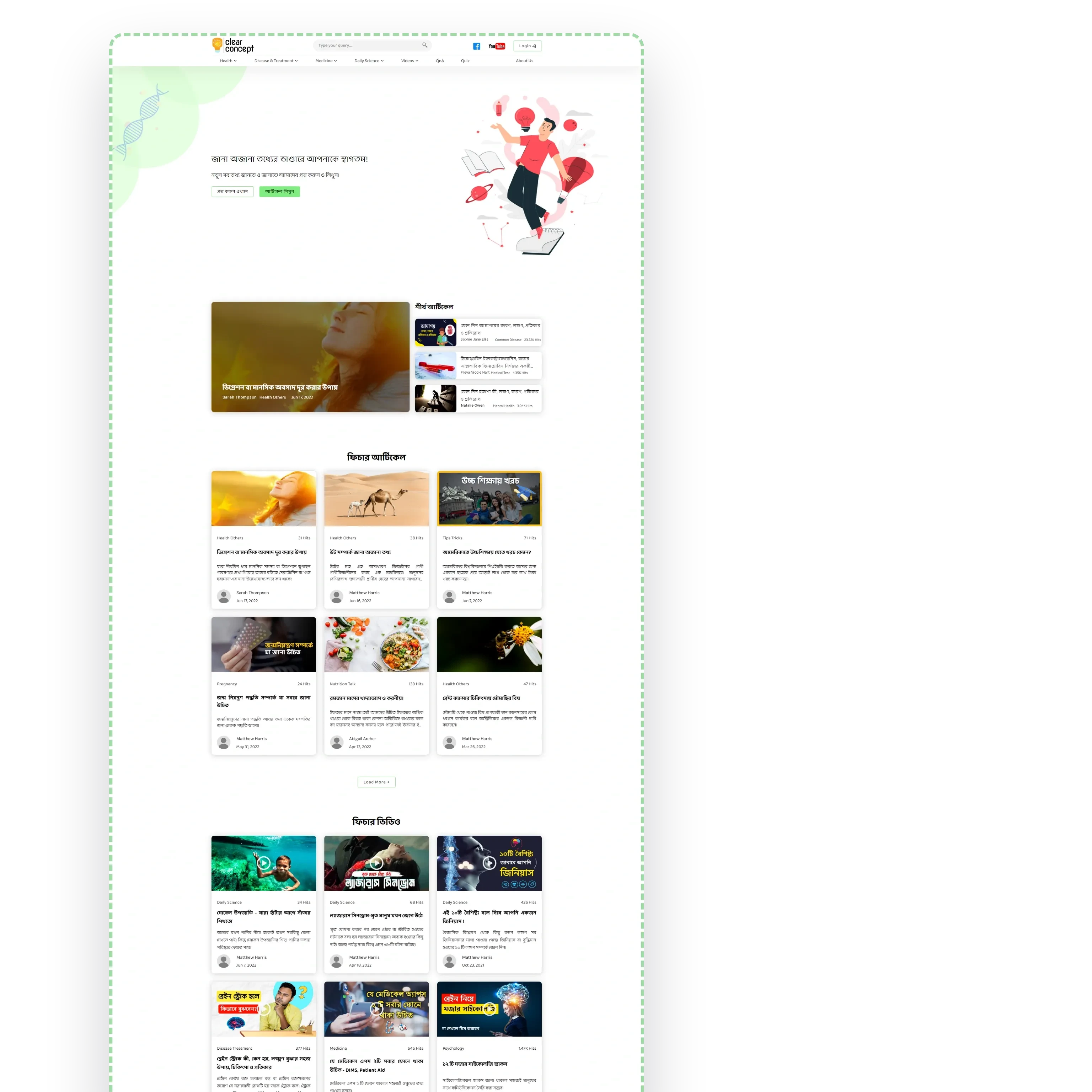
Articles and videos people come back for
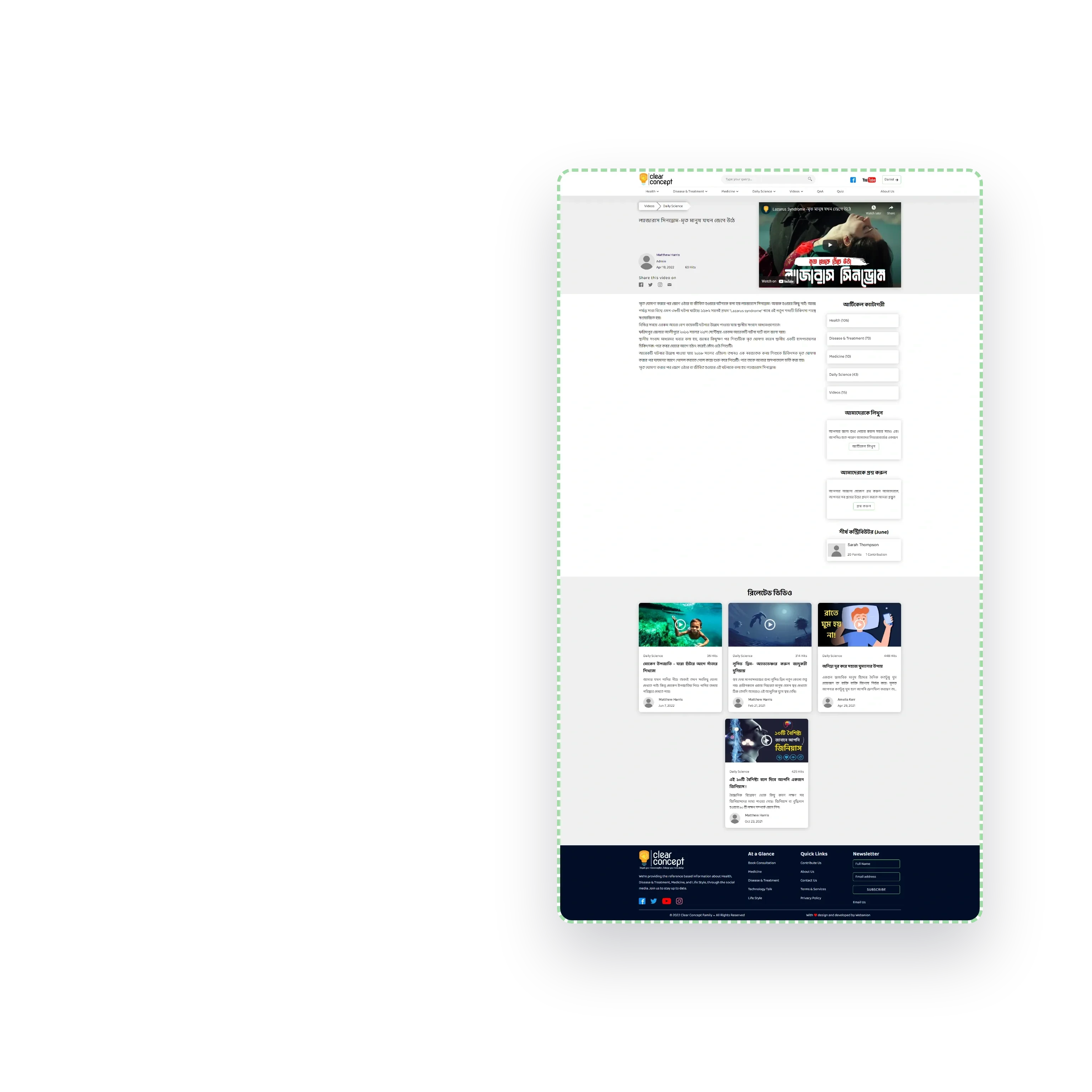
Readers get a steady flow of articles and videos, organised by health, disease and treatment, medicine and daily science, with the most read pieces up front and a search that reaches every article, video and question on the site. Each piece shows who wrote it and how often it has been read, so readers learn which contributors to trust.
Contributors write, the library grows
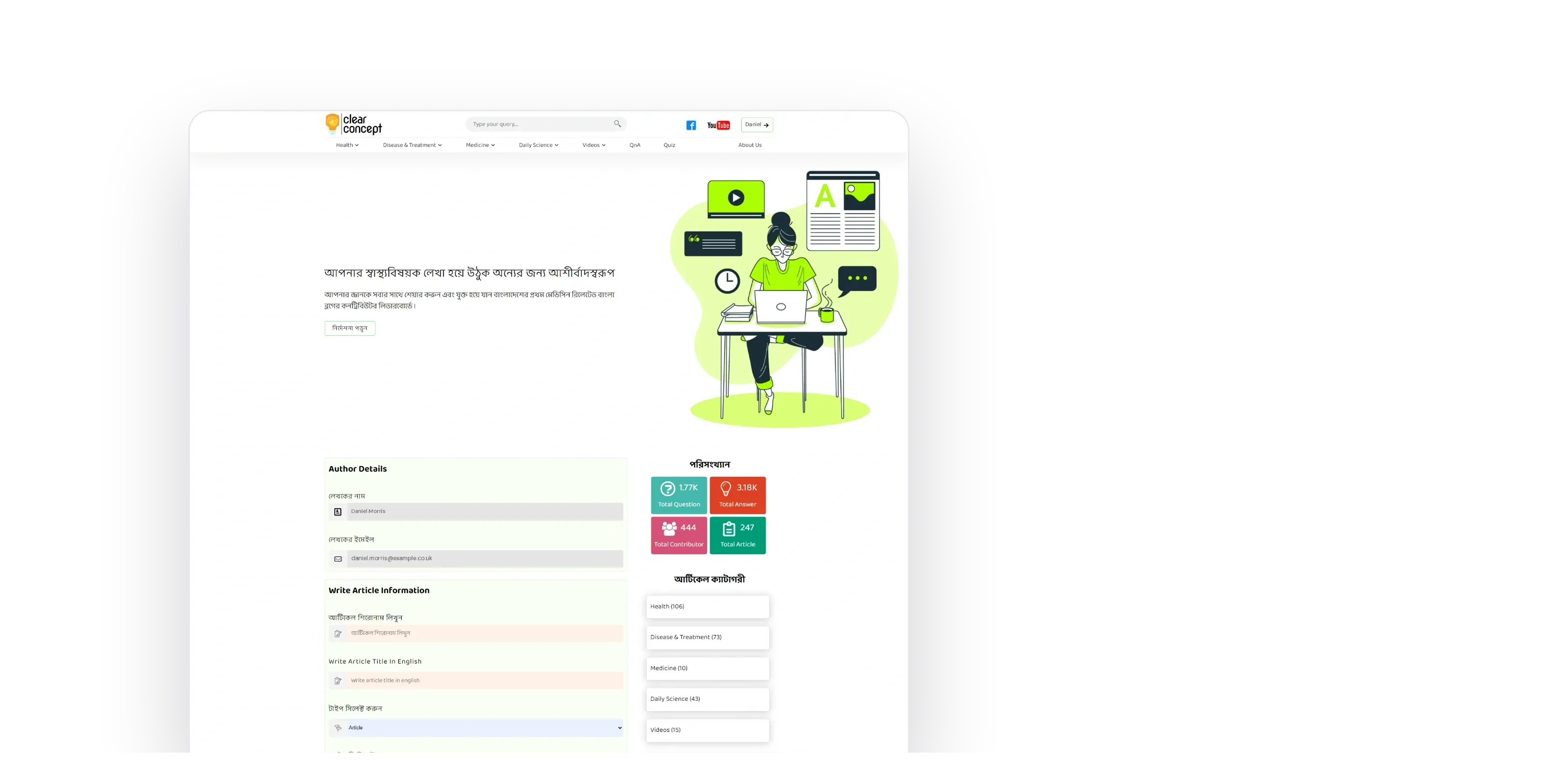
Contributors write articles and post videos through an editor built into the site, with every piece filed under its category. Their dashboard counts what they have written, the questions they have asked and answered, and the points they have earned.
The points make contributing visible, which keeps the best writers coming back and the library growing, and the site-wide totals show readers how much is already there.


Quizzes with honest timers
Timed quiz competitions run with the clock kept on the server, so a result cannot be gamed by pausing the browser, and results are published automatically when the quiz closes. Students get a fair test of what they know, and the organisation gets a reason for them to come back on quiz day.


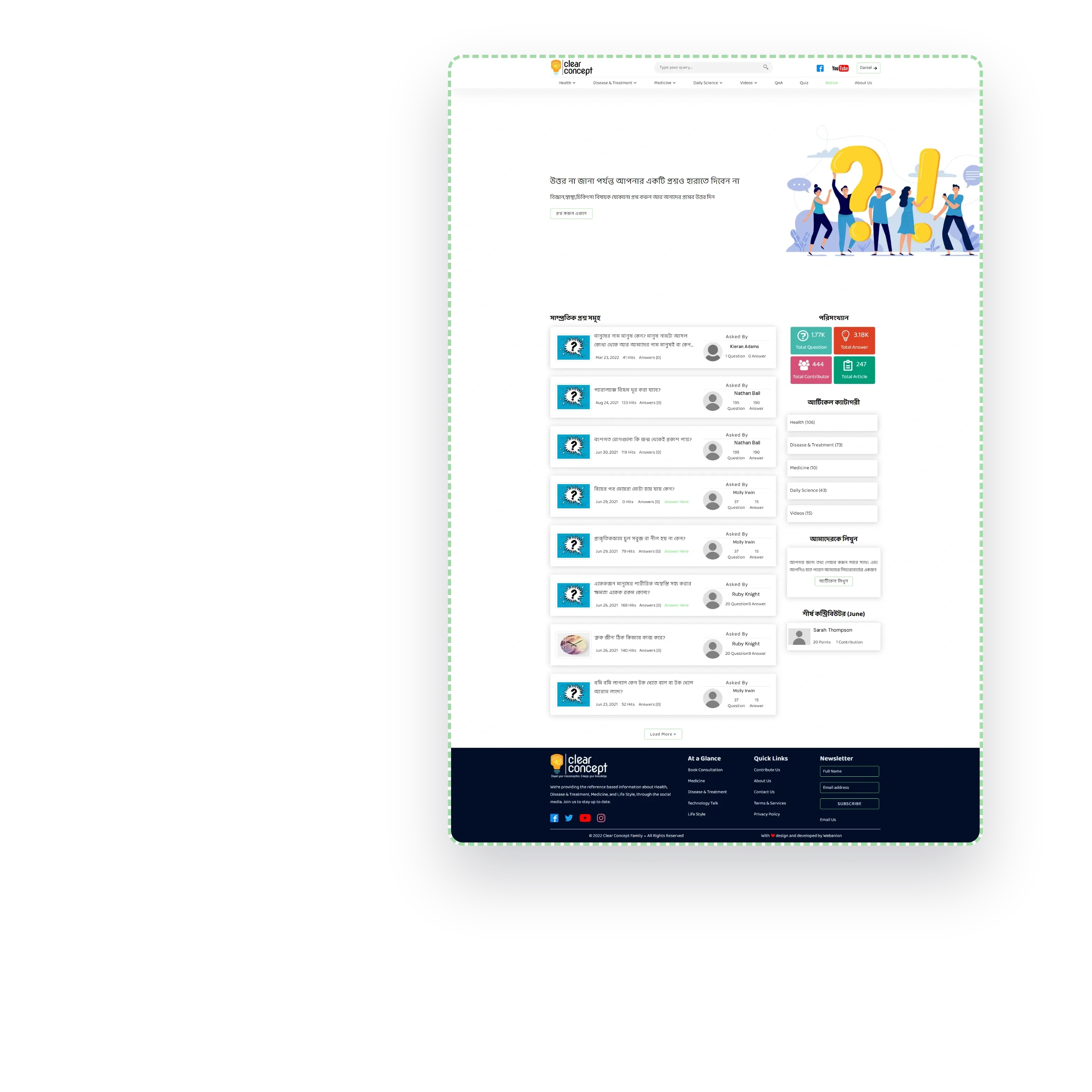
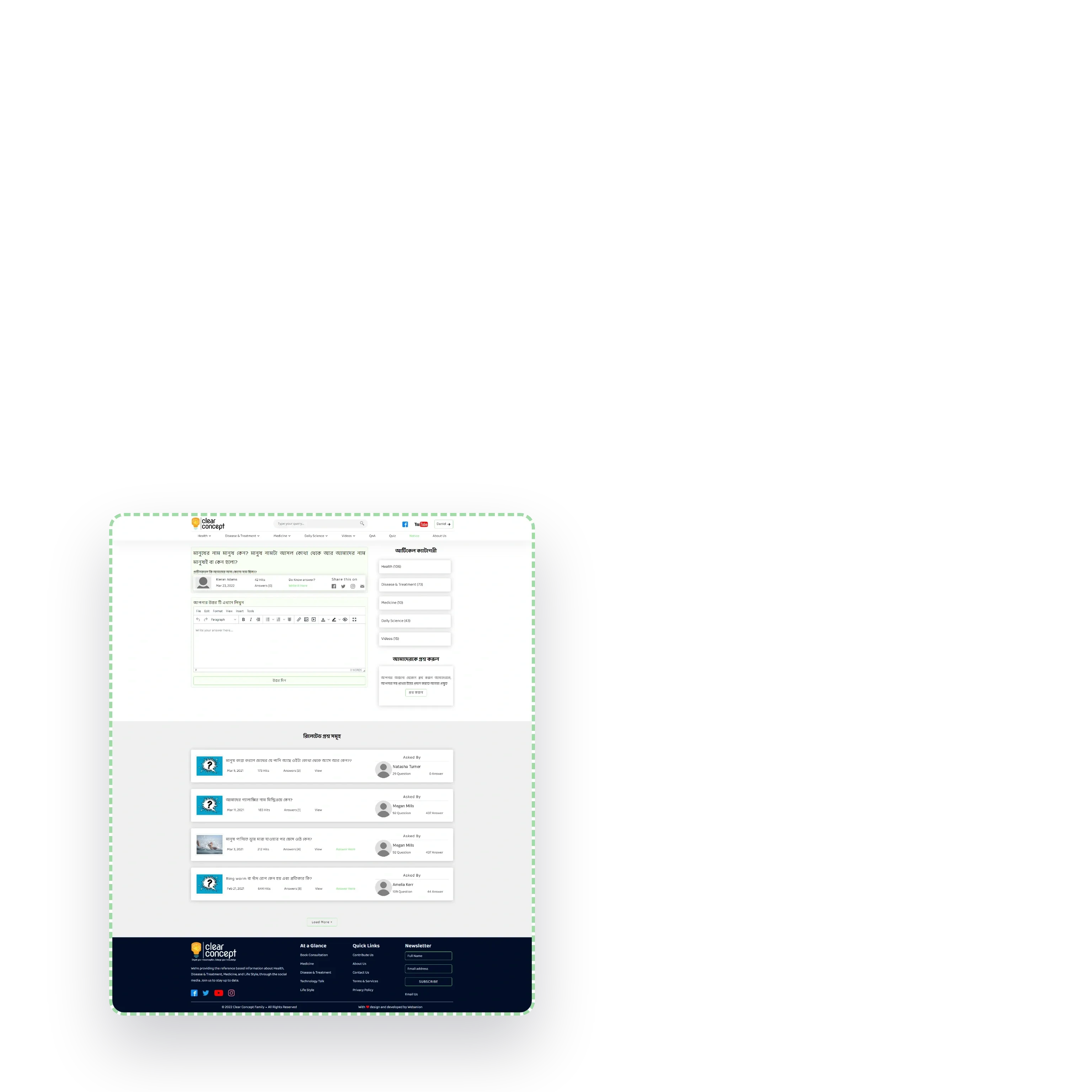
A community that answers
Readers ask health questions in Bangla and contributors answer them, earning points for every answer. Helpful members keep coming back, and a question asked once becomes a page the next reader finds through search instead of asking again.
The totals are public: well over a thousand questions and three thousand answers, from more than four hundred contributors.
Consultations booked by category
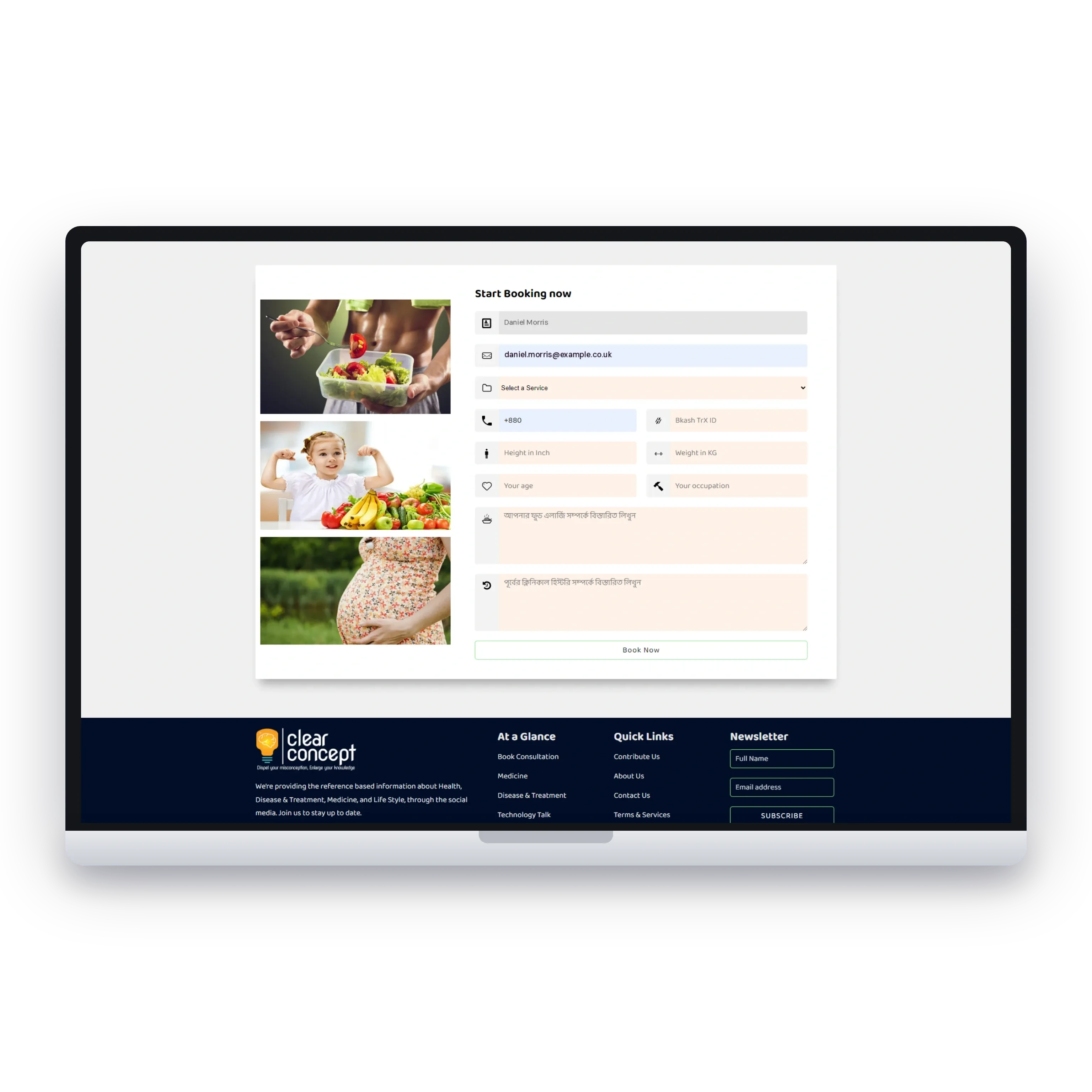
When a question needs more than an answer, a reader books a consultation by category: fitness diet, pregnancy and women's health, or diet for children and older people. The booking form collects what the nutritionist needs, from height and weight to allergies and clinical history, and reviews on each service come only from people who actually consulted.

Run by its own team
Clear Concept was the first platform in this portfolio and the densest single build in it: server-rendered Node.js and Express on MongoDB, with search, a notice board, a newsletter, social sign-in and a full admin behind it. After handover it was run by the organisation's own team, without a developer on call.
That set the pattern for later work: clients should end up owning and running what they paid for, as the Grace Bangla site still shows years later.
What they said

I hired Md. Moniruzzaman to create my organization's website. I wanted to buildup a science and health-related website where people can read articles, watch videos, ask any question and also can answer, book appointments for dietary guidelines, and can participate in science-related quiz competitions. Md. Moniruzzaman is a brilliant person who designs all of this section perfectly and develops with excellent programming. My website gets more admired for its beautiful design and this type of thinking. Moniruzzaman is very trustworthy and responsive. He is Highly Recommended!
Oct 25, 2023
(5.0)You May Also Like


CoverFanz - Admin Dashboard for a Performer Marketplace
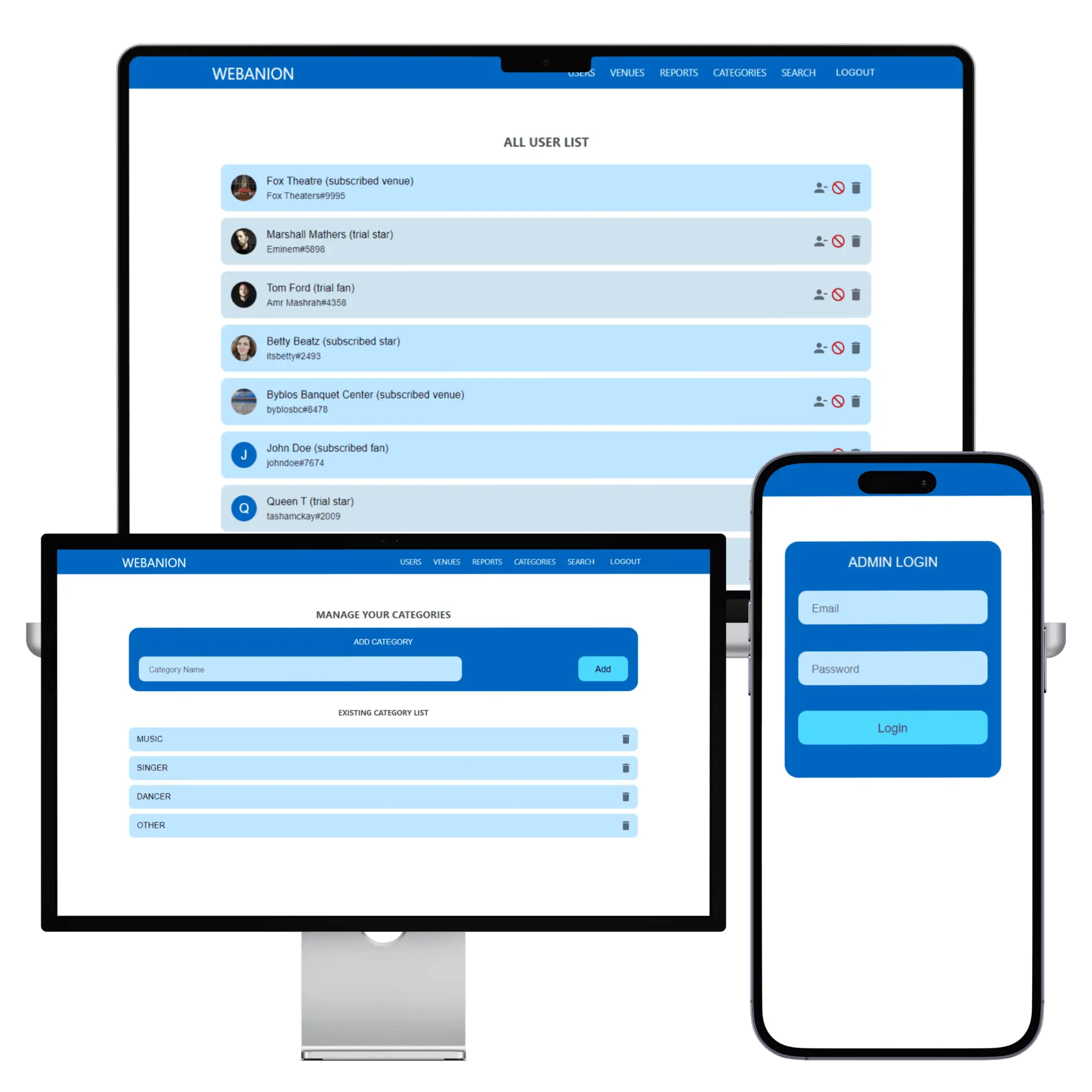
The admin dashboard that let CoverFanz's founder run a performer marketplace from launch day without asking a developer. Every fan, performer and venue sits in one list with its subscription state, new venues wait in an approval queue until their address is checked, reports land with the reason attached, and the kinds of act are a list the founder controls. It was built in the same month as the apps, on the same GraphQL API.

Md Moniruzzaman
Apr 29, 2022



Al-Insaf - Cooperative Finance Platform with Ledger and Loans
A cooperative finance organisation was running member records, savings, loans and investor capital across paper and spreadsheets, with no way to audit a branch or close a day cleanly. We built one system that holds all of it: member registration, daily collections, loan application through to disbursement, a multi-branch ledger, investor capital and an audit log that records who did what. Officers record each collection the moment it is made, managers approve loans and close the day, and the permission model decides what each role can see and do rather than hiding buttons. Everything shown in this case study runs on seeded demonstration data; real member records never appear in portfolio material.
Md Moniruzzaman


Webanion - Headless CMS Portfolio Platform with MCP Server
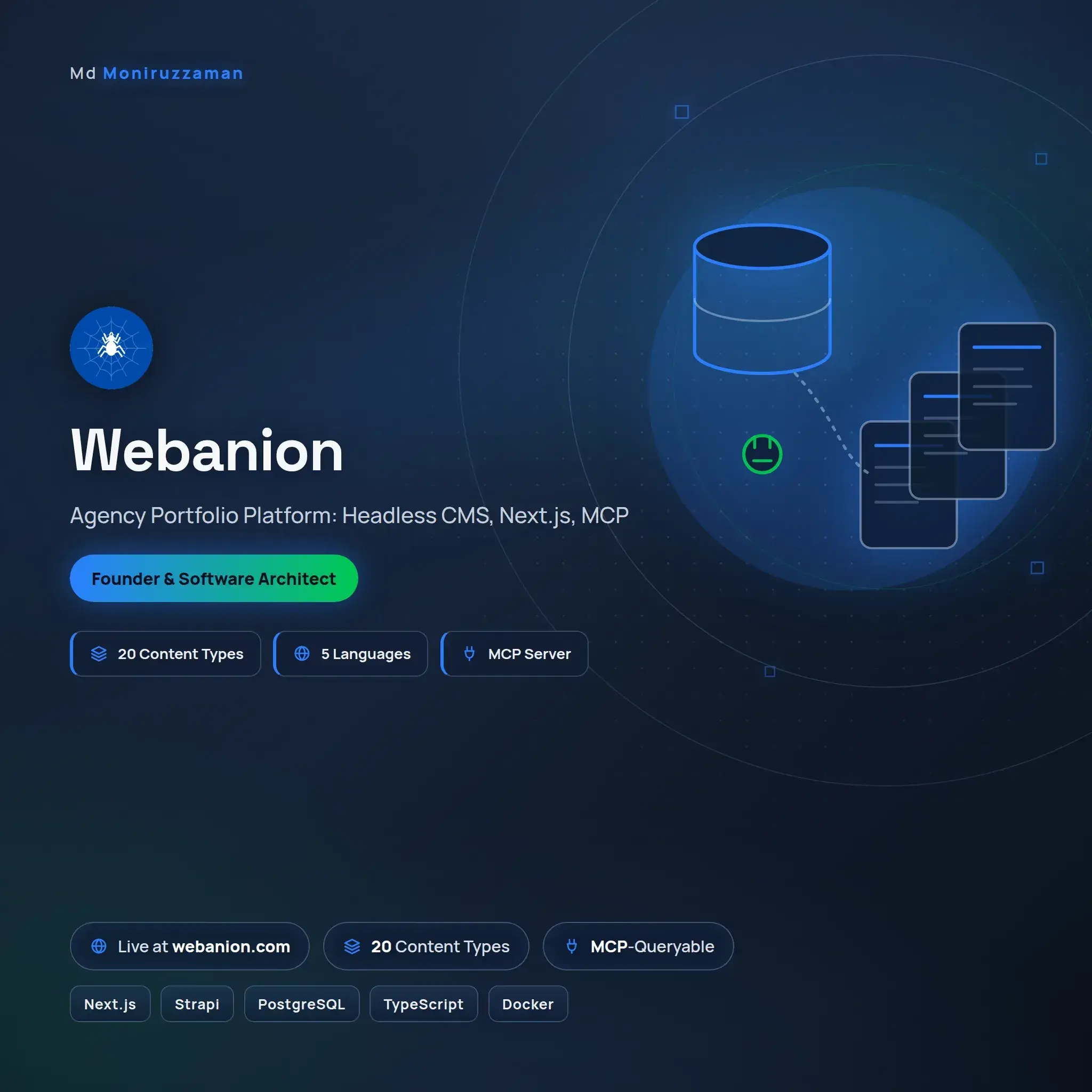
A static portfolio site could not carry work in five languages or keep pace with the writing behind it, so we replaced it with a platform. A headless CMS holds every case study, article and record; a Next.js front end renders them in English, Bengali, Spanish, Hindi and Chinese; and an MCP server exposes the same content to AI assistants, so an agent asked about this work reads the source rather than guessing from a scrape. Search, media handling, an approval flow and a public discovery layer all run on it. The proof is recursive: the page you are reading is served by the system this entry describes.
Md Moniruzzaman

The blog is field notes from production: architecture decisions, AI systems that survived contact with real users, and infrastructure that pays for itself. Written from the work, not about it.