Desktop App
Desktop software in Electron and React for the work that stays on a machine: offline-ready, packaged for Windows, macOS and Linux, and wired to the platform's backend like any other client when there is one. Keyboard Tracker, an employee activity tracker with its own report generator, is the example on this shelf.

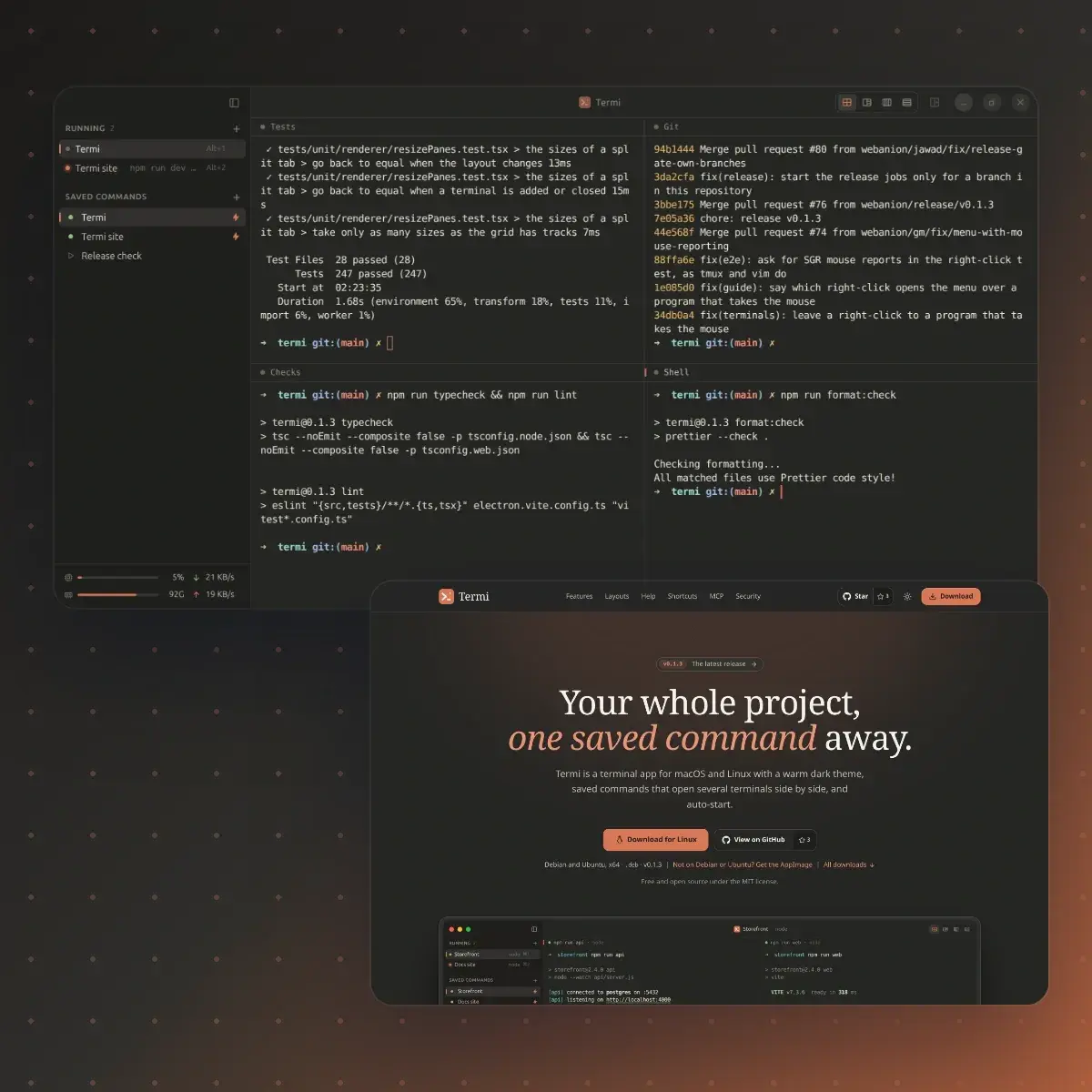

Termi, an Open Source Terminal App for macOS and Linux
An open source terminal app for macOS and Linux, released by Webanion under the MIT license: saved commands that open up to four terminals side by side in one tab, in a layout Termi remembers, and can start with the app; split, reopen, a command palette, a shortcut sheet, a built-in guide, and CPU, memory and network figures in the sidebar. Electron, React, TypeScript, xterm.js and node-pty, built with electron-vite and tested with Vitest, with an MCP server so an assistant can manage the saved commands. Source at github.com/webanion/termi.


Md Moniruzzaman, Jawad Ahbab


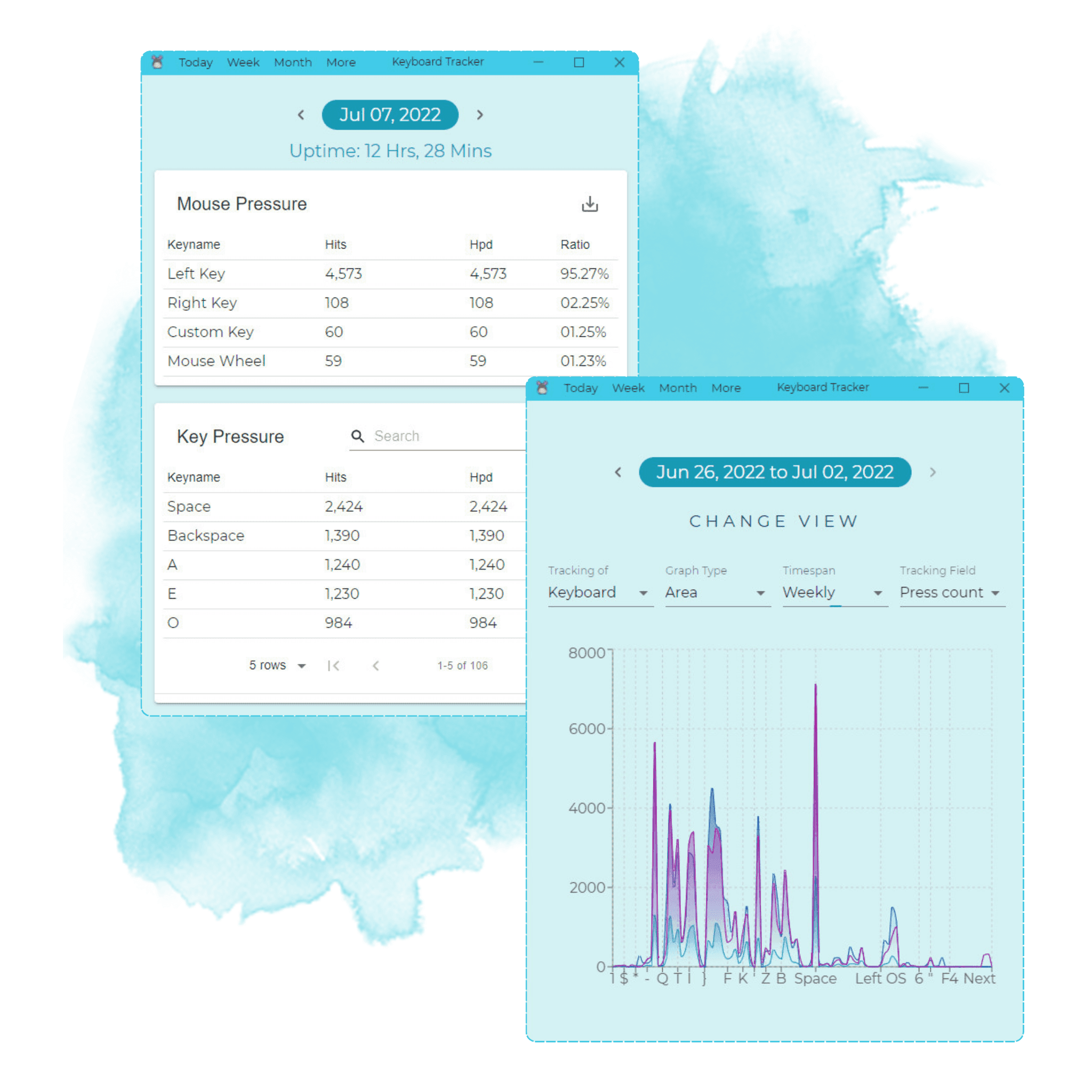
Keyboard Tracker - Desktop Activity Charts and Reports
A quiet desktop app for Linux, Windows and macOS that counts keyboard and mouse use, charts it and exports reports, built for Ja Turna in five weeks. It counts presses without recording what anyone types, charts a day or a lifetime and stays smooth over months of data, downloads any table as a PDF a manager can share, and backs up its whole history to one file for a new machine. Electron, React, TypeScript and Redux from one codebase.

Md Moniruzzaman
Sep 07, 2021
Other Areas I Build In
MCP servers that expose a real platform to AI assistants, agent pipelines that do real editorial work behind human approval gates, and the plumbing that keeps them in production. Built as systems, authenticated, scoped and audited, never as demos.
iOS and Android apps on React Native and Expo, built as a surface of the platform behind them: the same backend, auth and data model as the web, released through the stores on one cadence. The shelf runs from a booking platform and job-sharing network for UK minibus and coach operators to a traveller help app delivered over eighteen months, a life skills app for students, a local sports app, a distributor's billing tool and a fan platform.
Web platforms and the sites in front of them, on React and Next.js against a headless CMS: admin dashboards that run a business day to day, customer portals, a cooperative's ledger and loans, and public sites that load fast and read well to search engines and AI crawlers. Server-rendered, localized and measured, whatever the size.
The infrastructure and release work that keeps a platform live: a production migration off managed cloud onto self-hosted Kubernetes with no recorded downtime, Dockerized services behind Cloudflare, CI/CD that ships on push, and mobile releases taken through store review. Backups, TLS and monitoring are part of the job, not extras.

Embeddable pieces that carry a platform onto someone else's website. The Prebooked widget lets a minibus or coach operator put booking on their own site, served by the Fully Booked platform behind it, so customers book without leaving the page. Small to install, and held to the same standard as the product it extends.
The pieces around the platforms that are neither an app nor a site: gm-libs, the reusable TypeScript packages for auth, data, interfaces and background work that every Webanion frontend and backend starts from, and the design trail of a product, from an interactive Figma prototype and its UI/UX to the visual assets and tutorial videos that took it to market.